
4 Frameworks We Use to Design Immersive Experiences

Ciaran Armstrong
4 Frameworks We Use to Design Immersive Experiences
At Involv, we design immersive experiences that help groups explore complex social and environmental challenges by stepping directly into the decisions involved.
Rather than presenting information and hoping it lands, we create situations where people have to navigate trade-offs, uncertainty and consequences together.
This might be a leadership team working through a climate risk scenario, a group exploring what a circular strategy actually looks like in practice, or a room full of people trying to make a difficult call where there isn’t a clear right answer.
Over time, we’ve found that most of what we build tends to fall into four core frameworks. They’re not strict models, but they give us a useful way of shaping how an experience feels and what kind of thinking it unlocks.
1. The Jury
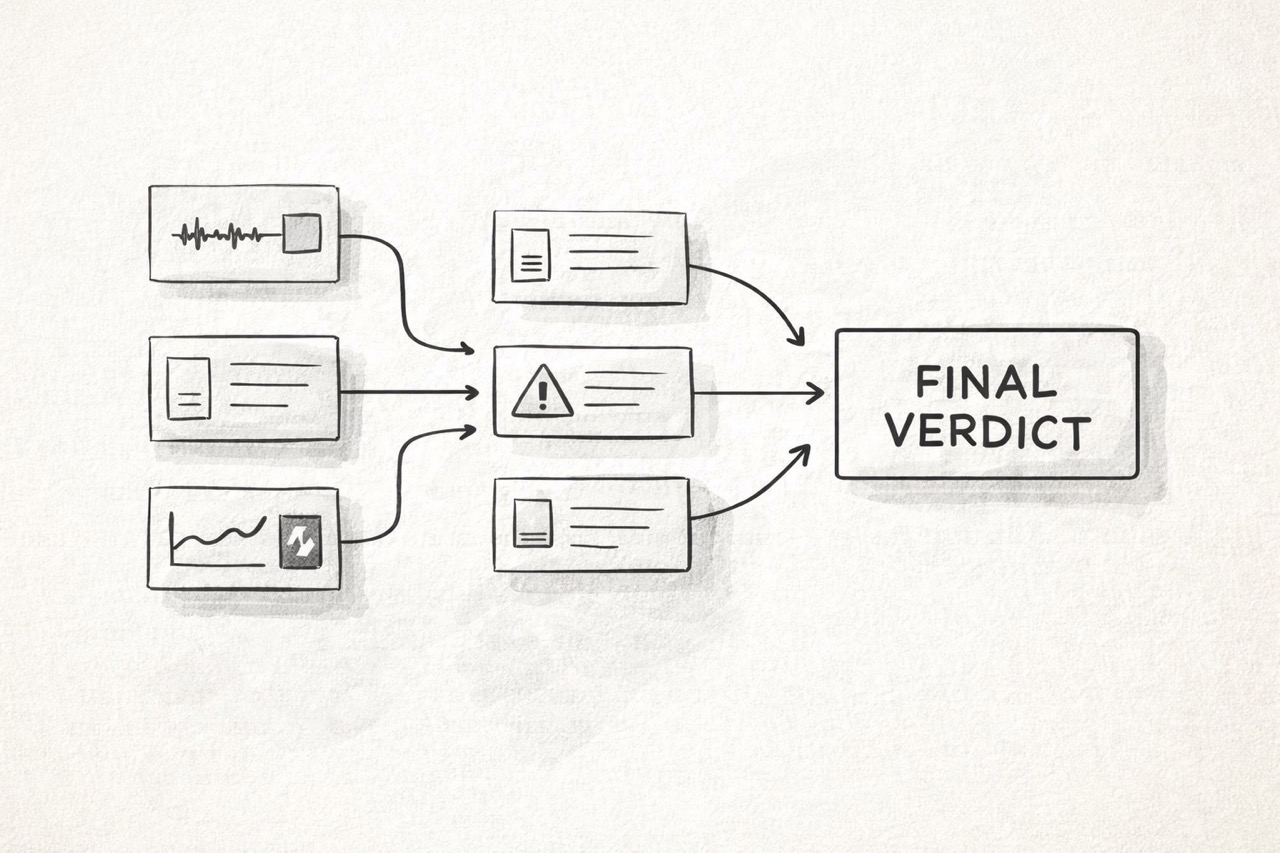
This is probably the most structured of the four. The Jury model is built around a single, high-stakes decision. Players are presented with different pieces of evidence - reports, testimonies, data points - and their job is to work through it and reach a final verdict.
It works well because it creates a sense of weight. People take their time, challenge each other and try to justify their thinking. The conversation is grounded in “what do we believe based on what we’ve seen?”
The strength of this approach is the depth of discussion it creates. The limitation is that it’s all focused on one decision, so it doesn’t always capture how things evolve over time.
2. Modular Strategy
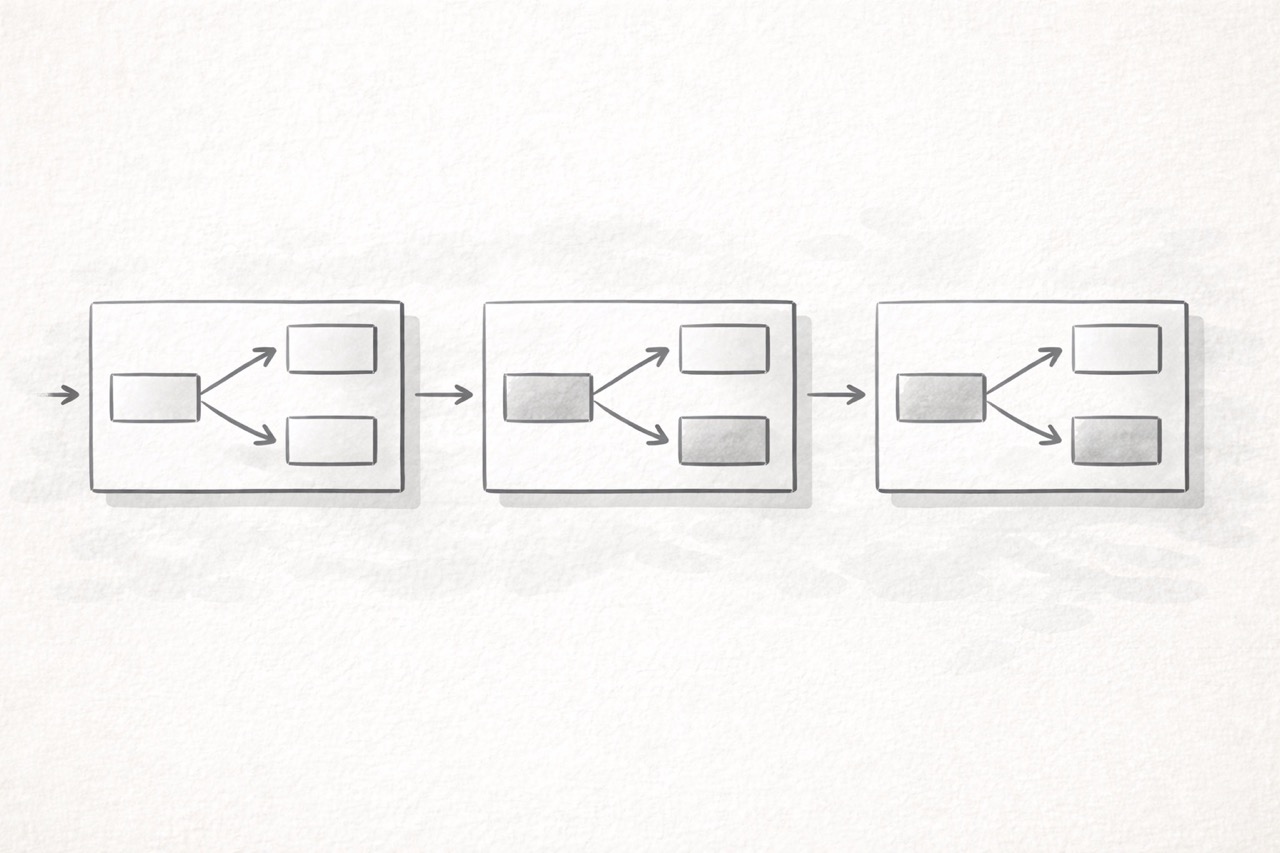
This one is more about building something step by step. Instead of one big decision, players move through a sequence of decision modules. In each stage, they make a choice and that choice shapes what comes next.
It’s a useful way of exploring strategy in a practical sense. Rather than talking about “the strategy” as one thing, it breaks it down into smaller, connected decisions. You start to see how a direction forms over time.
The strength here is that it feels manageable and constructive. People can see how their thinking builds. The trade-off is that it doesn’t fully branch out into completely different futures, it’s more guided than open-ended.
3. Boardroom Dilemma
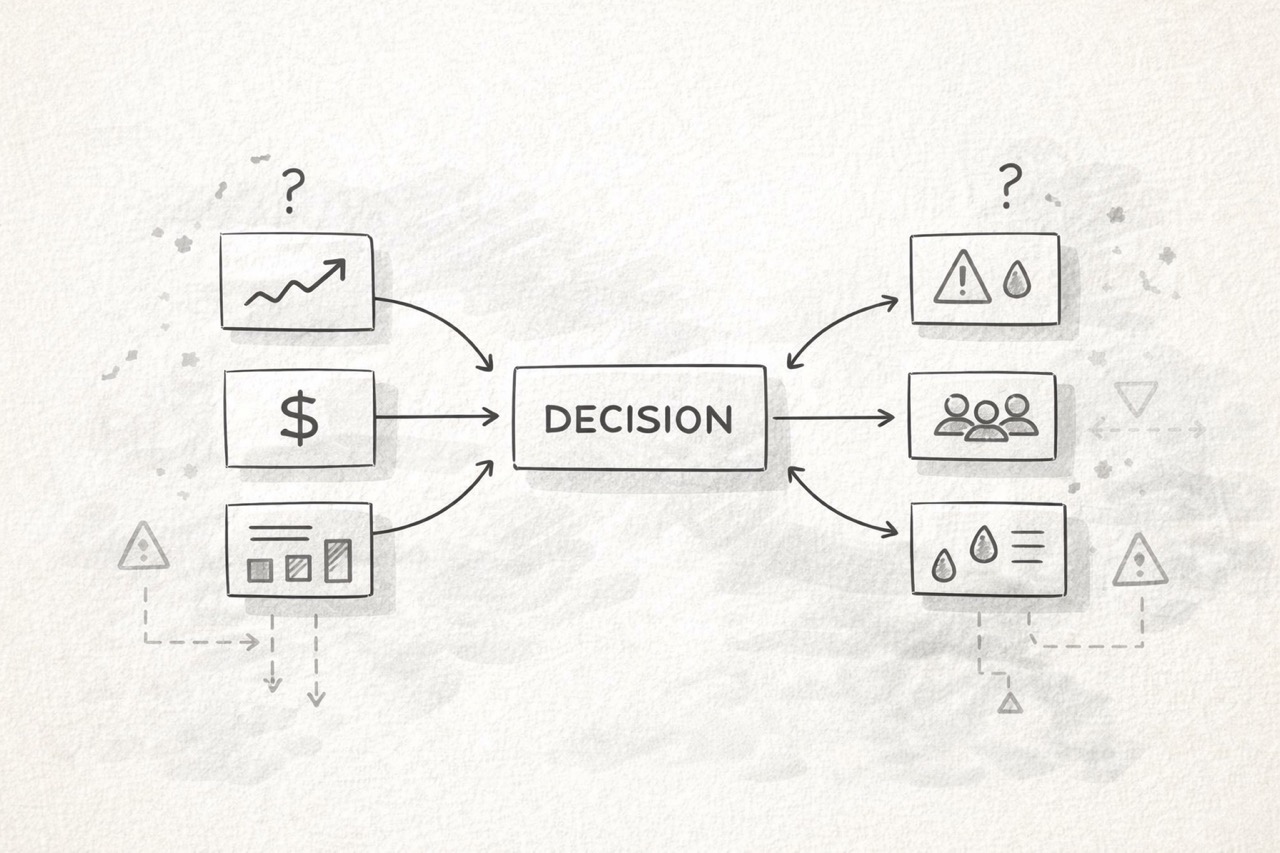
This is where things get a bit more uncomfortable, in a good way. The Boardroom Dilemma is built around a central tension, usually between competing priorities like financial performance and social or environmental impact.
Players take on the role of a leadership group and have to decide what they would actually do in that situation. There’s rarely a clean answer and that’s the point.
It works well because it reflects real-world decision-making. People have to balance pressures, justify trade-offs and sometimes sit with decisions they’re not fully comfortable with.
The strength is realism and tension. The limitation is that it stays focused on one dilemma rather than exploring a wider system.
4. Branching Scenario
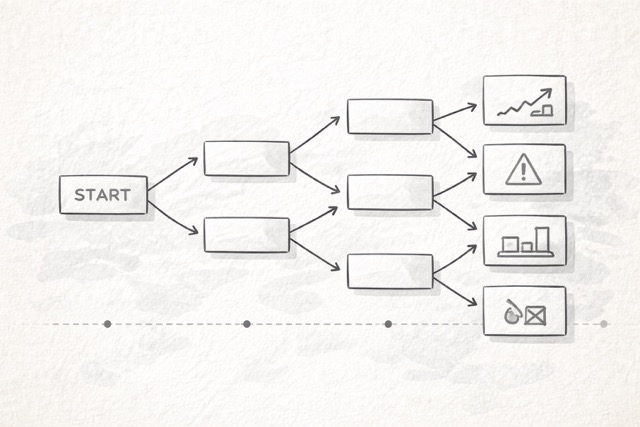
This is the most dynamic of the four. Players move through a series of connected decisions and each choice changes what happens next. Over time, those decisions start to diverge into very different outcomes.
It’s a powerful way of showing consequences. Small decisions early on can have a big impact later and people start to see how certain patterns of thinking play out over time.
The strength of this model is the sense of agency and movement it creates. The trade-off is that it’s more complex to design and facilitate, especially if you want the different pathways to feel meaningful.
So how do we choose?
It really depends on what we’re trying to help a group explore.
If the focus is on making a well-justified decision, we’ll often use The Jury.
If it’s about building a strategy over time, Modular Strategy tends to work well.
If we want to surface tension and trade-offs, we’ll go with a Boardroom Dilemma.
And if the goal is to show how decisions compound and create different futures, we’ll use a Branching Scenario.
In practice, we often blend elements of these, but having these four starting points helps us design with intent.
If you’re curious to explore this further
If you’d like to explore building your own immersive experience, you can either get in touch with us to design something together or try building one yourself on the platform.
Either way, the aim is the same - to move from talking about action to taking action.
.png)


.png)
.png)
.png)
.jpg)
.svg)
.svg)